Mastering the Nordic Kitchen: Simplicity and Warmth
The Essence of the Nordic Kitchen: More Than a Trendd
The Nordic kitchen style has become a design classic thanks to its focus on practicality without sacrificing aesthetics. It is based on creating bright, clean, and welcoming environments that invite calm. We analyze the fundamental pillars that make this design so functional and timeless.
The Timeless Combination: Pure White and Natural Wood
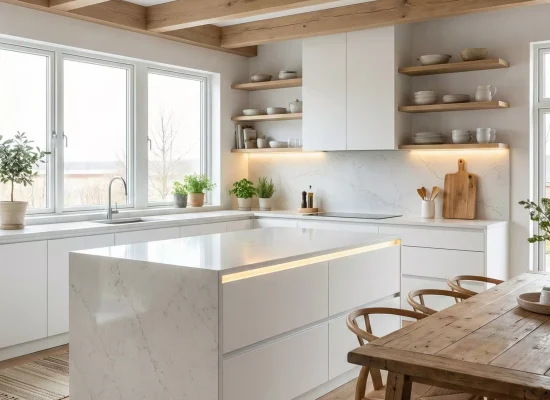
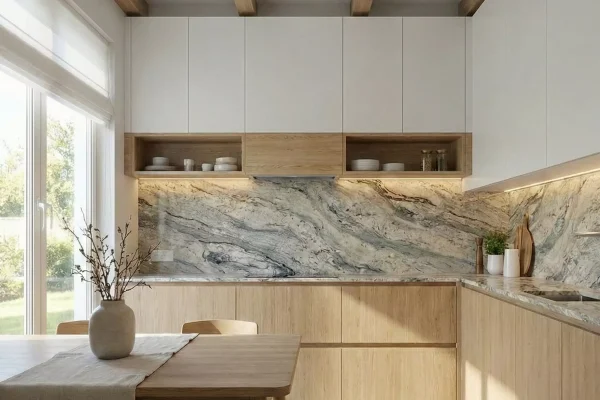
The heart of Nordic kitchen design lies in the perfect balance between the luminosity of white surfaces and the organic warmth of wood. White reflects light, visually expanding the space, while wooden elements prevent the environment from feeling cold or clinical, adding essential texture and comfort. To complete this look, durable granite or quartz countertops in neutral tones blend seamlessly, enhancing both functionality and style.
Maximizing Luminosity: Letting the Light In
Given the scarcity of natural light in Northern Europe, capturing every sunbeam is a priority in any Nordic kitchen. This is achieved by keeping windows clear of heavy curtains, using light colors on walls and cabinets, and integrating strategic warm artificial lighting to keep the ambiance bright throughout the day.
The Central Island as a Social and Functional Hub
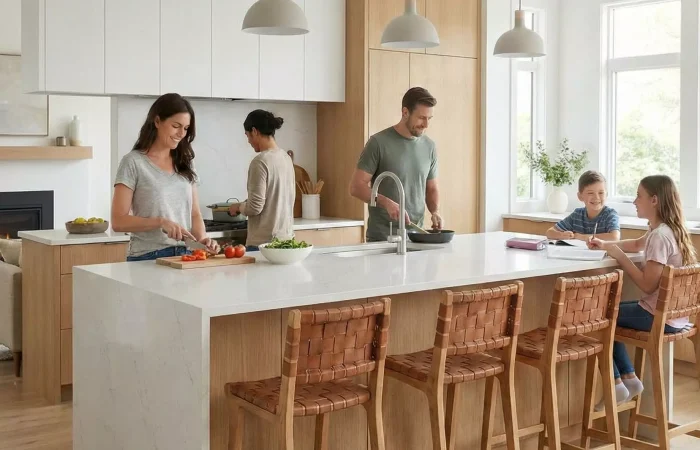
In the modern home, the kitchen is the main gathering center. A generous island serves as the centerpiece of the modern Nordic kitchen, acting as a meeting point for the family. At Countertops Specialist, we design these islands to be the perfect bridge between the cooking zone and the living area.
Defining Spaces with Glazed Partitions
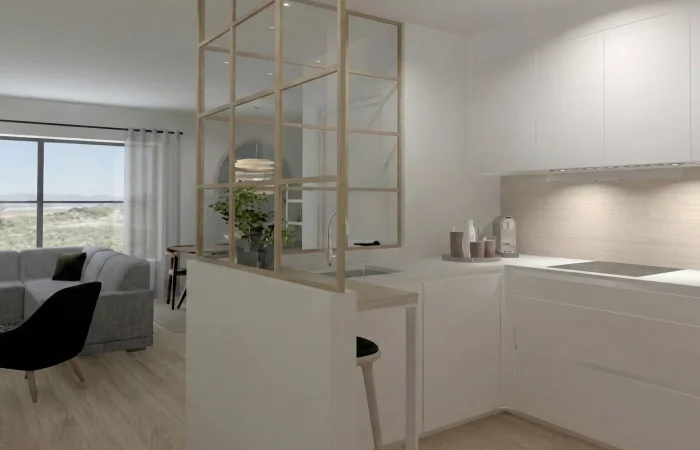
For those who want to delimit the kitchen without losing the feeling of spaciousness or blocking light, industrial-style enclosures with black iron profiles and glass are the ideal solution. They provide a modern contrast, defining acoustic zones while maintaining a clear visual connection between environments.
The Open Concept: Versatility and Flow
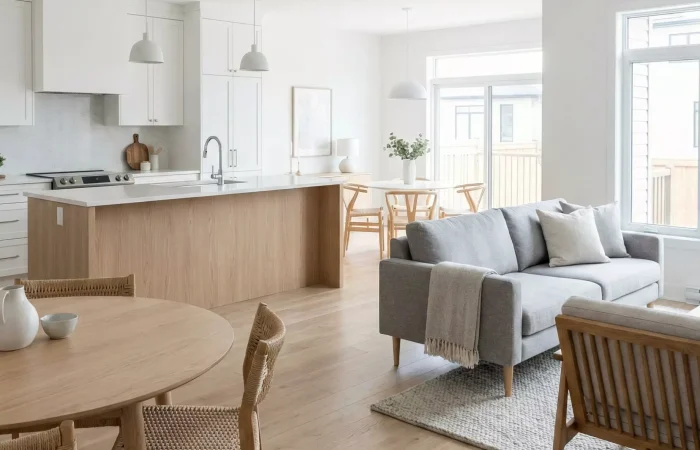
The contemporary Nordic kitchen integrates fluidly with the living and dining room, creating a unified and versatile “living space.” For this to work effectively, maintaining a coherent color and material palette across all areas is crucial, ensuring the transition is smooth and the space feels expansive.