Marble vs Granite Countertops: Which One Is Right for Your Kitchen?
Elevate your home with kitchen to entertain
Choosing between marble and granite countertops is one of the most common decisions homeowners face when designing a kitchen or bathroom. Both natural stones offer timeless beauty, durability, and unique character — but each material has different advantages depending on your lifestyle and design goals.
Whether you prefer the luxurious elegance of marble or the durability of granite, understanding the differences can help you choose the perfect surface for your space.
Marble Countertops: Elegant & Timeless
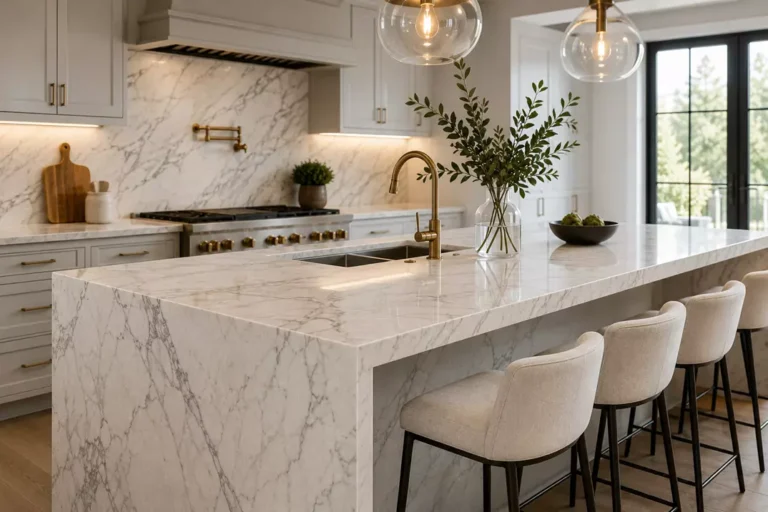
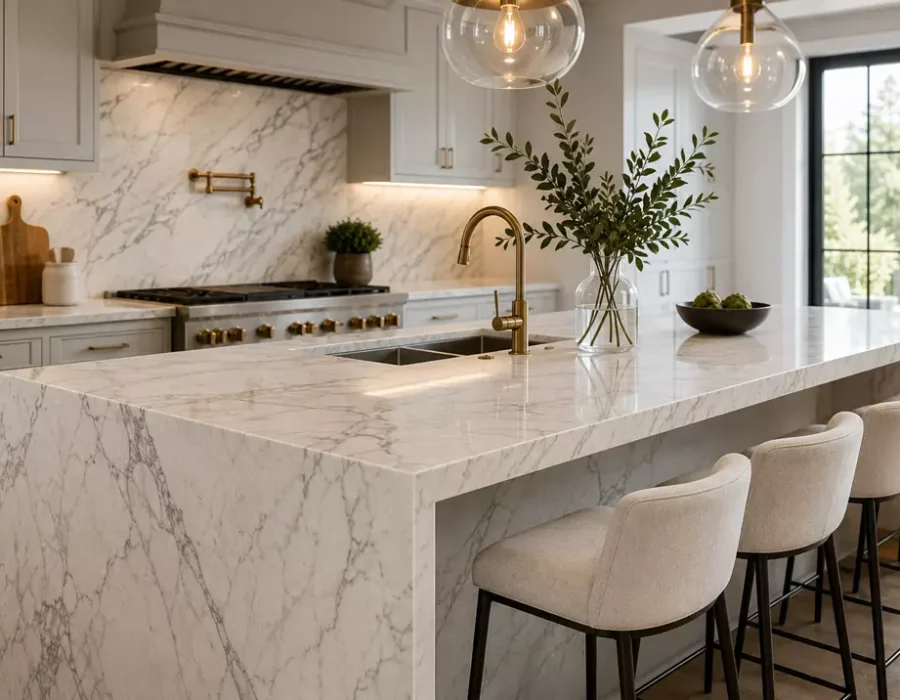
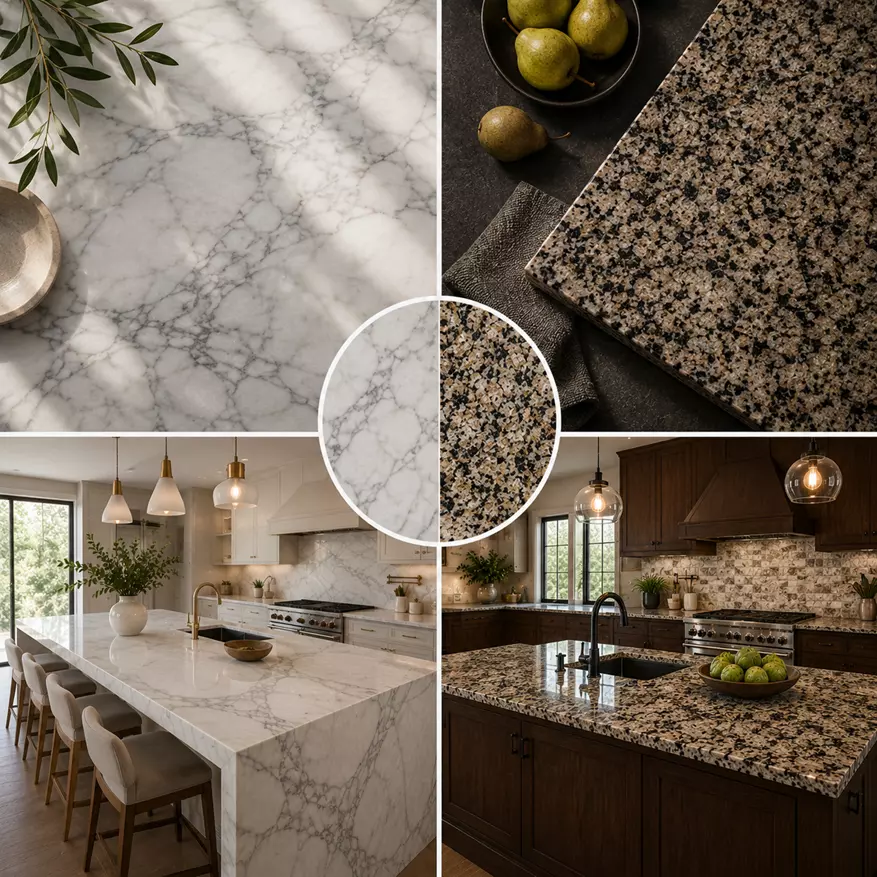
Marble countertops are known for their soft veining, bright appearance, and luxurious feel. They bring a refined and sophisticated look to kitchens, bathrooms, and feature walls.
Because marble is a natural stone, every slab has unique patterns and movement that create a one-of-a-kind design.
Marble works beautifully in:
- luxury kitchens
- bathroom vanities
- statement islands
- low-traffic surfaces
However, marble is more delicate than granite and requires regular care to maintain its polished appearance.
Granite Countertops: Durable & Practical
Granite countertops are one of the most durable natural stone options available. Their resistance to heat, scratches, and daily wear makes them ideal for busy kitchens and high-use areas.
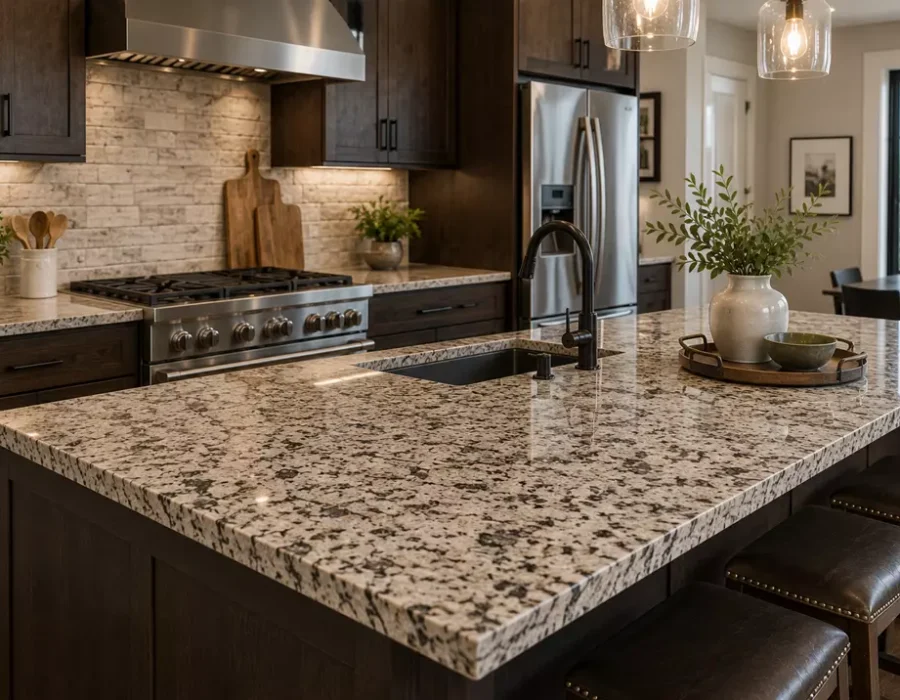
Granite also offers natural texture and variation, creating a more dynamic and organic appearance.
Homeowners love granite because it combines:
- durability
- natural beauty
- easy maintenance
- long-lasting performance
With proper sealing, granite countertops can remain beautiful for many years.
Marble vs Granite: The Main Differences
Appearance
Marble features soft veining and a smoother, elegant aesthetic, while granite typically has more texture, movement, and natural variation.
Durability
Granite is harder and more resistant to scratches, stains, and heat compared to marble.
Maintenance
Marble requires more maintenance and sealing, especially in kitchens where acidic foods and spills are common.
Best Use
Granite is ideal for busy family kitchens, while marble is often chosen for more decorative or luxury-focused spaces.
Which Countertop Material Should You Choose?
If you love timeless luxury and elegant veining, marble countertops can create a stunning statement in your home.
If you prefer a durable, low-maintenance surface for everyday use, granite countertops are often the more practical choice.
Both materials offer natural beauty and long-term value when professionally installed and properly maintained.
Find the Perfect Natural Stone for Your Project
At Countertops Specialist, we help homeowners choose premium countertop materials that match their lifestyle, design vision, and budget.
From marble and granite to quartz and porcelain, our team is here to help you create a kitchen or bathroom that feels both functional and timeless.
Share This:
Tips & Hints
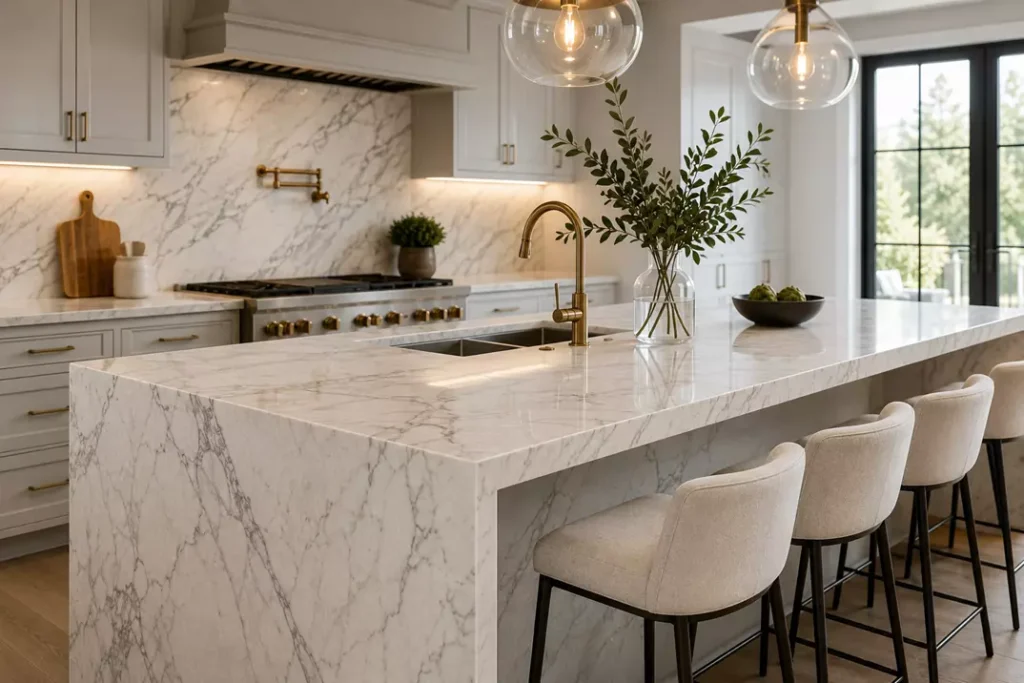
Marble vs Granite – What is the Difference?
Marble vs Granite Countertops: Which One Is Right for Your Kitchen? Elevate your home with kitchen to entertain Choosing…

Kitchen with Quartz Countertops
Transform your kitchen with Countertops Specialist's quartz countertops – durable, stylish, and versatile.
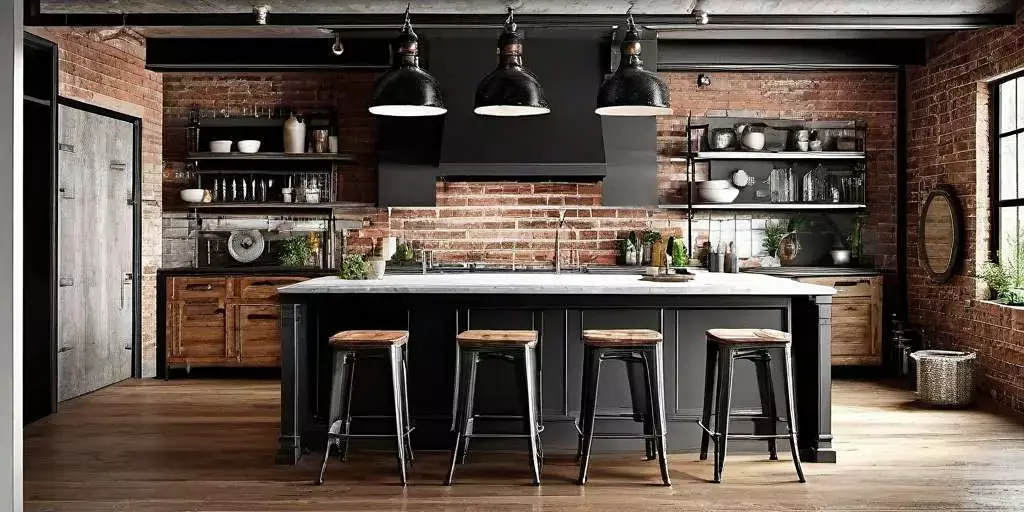
Industrial Kitchens
Industrial Kitchens: Modern Style with Raw Character Industrial kitchens continue to be one of the most popular design trends…
Subscribe to Our Newsletter
Marble and granite are two popular natural stones which have been in the construction industry for a long time. They both have their advantages over each other in terms of appearance, durability etc. some of which have been listed below:
What is marble?
“Marble” is a term used by geologists to refer to metamorphosed limestone. It is a metamorphic rock composed of carbonate materials which is formed when limestone in the earth’s crust is subjected to high temperature and pressure. This causes the stone to undergo a metamorphosis stage where the calcite in the limestone recrystallizes and forms calcite crystals changing the texture of the rock. As the metamorphosis stage progresses the crystals become larger and can be seen as interlocking crystals even by unaided eyes.
Among all natural stone marble is the most elegant and luxurious stone. It is also highly versatile as it can be used in flooring, ornamental furnishings, fireplace and bathrooms. Just like any other natural stone marble comes in a variety of colors ranging from milky white to red and black which is the result of impurities present in the stone’s structure. The impurities are in bands which increase the elegance of the stone. However, since marble is made of calcite crystals which is a salt of calcium, marble is prone to staining especially from liquids which are acidic in nature due to which it is usually not recommended to install marble for exposed places like commercial kitchens.
What is Granite?
Granite is a granular igneous rock which has a phaneritic texture, it is formed by the slow crystallization of the magma under the surface of the earth. Many items that we encounter in our daily activities especially in big cities where pavers, floor tiles and cemetery monuments are made from granite. Many famous places like Mount Rushmore, Yosemite Valley and Torres del Paine in Chile are granite hubs.
Granite is mainly composed of quarts and feldspars, it is coarse grained and usually in light colors. It has been in use extensively since the ancient times for both indoor and outdoor applications.
Granite vs Marble
- Hardness and longevity:Granite is comparatively harder and stronger than marble. It is mostly known as the most durable natural stone and compared to marble. It is resistant to heat and can easily withstand hot cookware therefore it is perfect for kitchen tops. Marble is also susceptible to fading of color and becoming duller overtime. Unlike the stains which can be removed, a dulled marble has no way getting its shine back. It is an irreversible process and a major drawback of marble.
- Reactivity to Acidic substance: Both natural stones have a porous structure but the metamorphic attributes of marble makes it more porous and therefore marble is easily stained from spills especially from liquids that are acidic in nature like fruit juices and wines. On the other hand, granite is much more resilient towards stains as long as an effective sealant is maintained on the surface liquid spills will not permeate into the surface.
- Appearance: The appearances of both marble and granite is quite different from each other. Granite’s color variation appears as freckling throughout the stone because granite has meddled stones in it like feldspar, mica and amphibole. Marble, on the other hand, has a grayish or cream color with veins running through it. The veins in marble are usually due to impurities like iron oxide.
- Applications: The durable quality of granite makes it appropriate for kitchen countertops and hallways where there is high foot activity while marble is more apt for areas where there is less traffic like bathrooms. Marble gives a bright unique look and is suitable for surfaces that are used less frequently.
- Cost: Granite and marble both are to be installed by professionals as the slabs are really heavy. The approximate cost for both marble and granite is $50 to $100 however high end granite is cheaper than its counterpart marble. The actual price however depends on the quality of the stone, complexity of the job and the style of the tiles.
- Maintenance: Sealants are used on both granite and marble to prevent staining and etching. Marble requires sealing much more frequently i.e. twice a year (recommended by professionals) whereas for granite sealing once every two years is sufficient. The actual requirement for resealing depends on how heavily the surface was used and how regularly the stone’s cleaning was done.
How to select best stone for your Project?
So, by now, you know all the properties of both stones. You know the price difference and how their qualities are different. Now for a final selection, you need to consider your project first.
If you need a good and affordable design, you can go for marble but if you’re looking for a long term durable solution and can spend some money as well, going for granite and spending on it is not a bad option at all.
Conclusion
Marble and Granite both have their own unique properties and qualities. In the end, it all depends on the aesthetics and where you are going to use this stone.
If you are willing to devote some of your time in maintenance of tiles for a more beautiful and elegant design then go for marble. However, if you want a natural stone with more durability, scratch resistant properties and less wear and tear ability then granite is the best option for you.